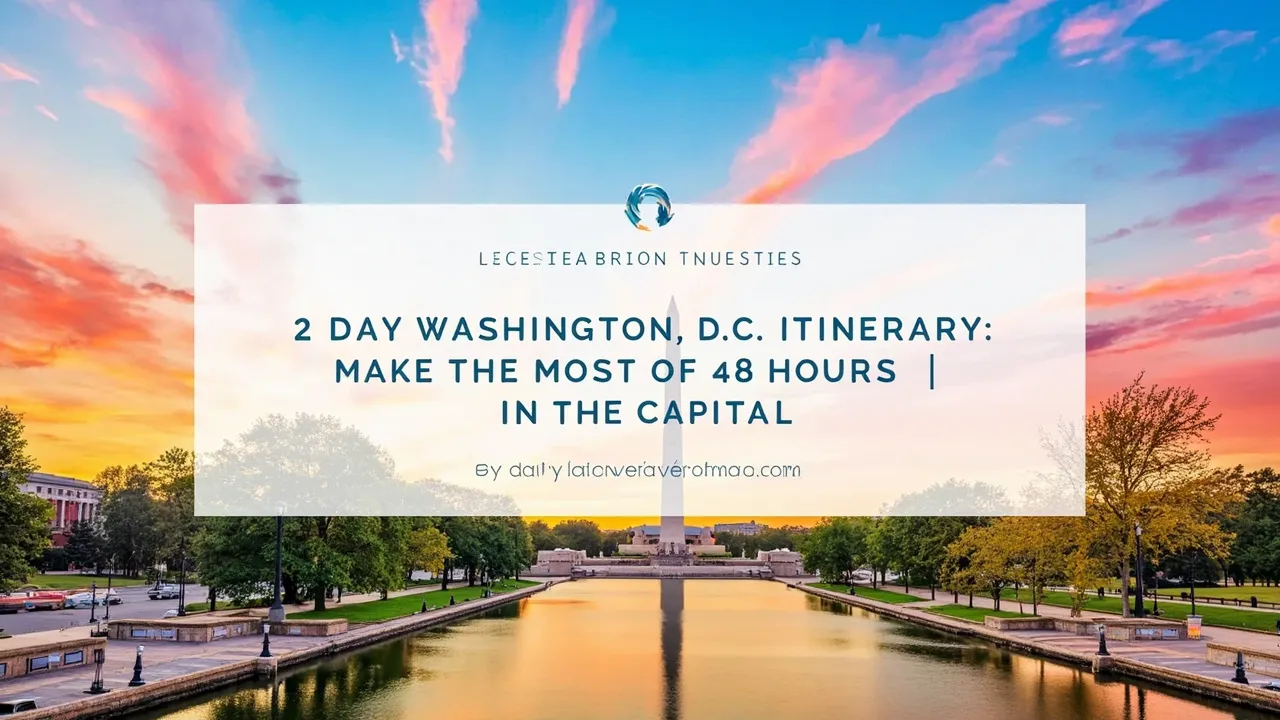
Your Ultimate 2 Day Washington, D.C. Itinerary
Two days in Washington, D.C. sounds like a challenge, but here's the honest truth: the capital is surprisingly walkable, the metro is straightforward, and most of the heavy-hitting attractions are clustered right around the National Mall. You won't see everything—nobody does in one trip—but you can absolutely walk away with a deep appreciation for this city.
I've put together this 48-hour Washington, D.C. itinerary to help you prioritize like a local. Let's get into it.
Quick Travel Facts Before You Go
Best time to visit: March through May or September through November. The weather is pleasant and the cherry blossoms (peak around late March/early April) are iconic for good reason.
Getting around: The Metro is your best friend here. It's clean, affordable, and connects directly to most major attractions. Get a SmarTrip card at any station. Taxis and rideshares are also readily available.
Budget tip: Almost every Smithsonian museum and the National Zoo are completely free. Budget your money for food and transportation, not admission fees.
Crowd hack: Start your day early—museums and monuments are far less crowded before 10 AM.
Day 1: The National Mall and Beyond
Morning: Lincoln Memorial and the Reflecting Pool
Start your first morning at the Lincoln Memorial. It's the most recognizable monument in the country, and arriving early means you'll practically have the steps to yourself. Stand at the base and look out over the Reflecting Pool—it's one of those moments that genuinely takes your breath away.
From here, walk along the National Mall path heading east. You'll pass the World War II Memorial on your right and the Vietnam Veterans Memorial ahead. These memorials are incredibly moving, and the morning light makes them even more powerful.
Mid-Morning: Smithsonian Museums
You have several outstanding options along the Mall, and honestly, you can't go wrong:
- The Smithsonian National Air and Space Museum is a hit with visitors of all ages—lunar rock samples, the Wright Brothers' flyer, real spacecraft.
- The National Museum of American History houses the original Star-Spangled Banner and an impressive collection on America's history.
- The National Museum of African American History and Culture is one of the newest and most powerful museums in the city—but book your timed entry pass well in advance.
My recommendation: Pick one or two museums max. Trying to rush through four museums in one day means enjoying none of them.
Lunch: Walk to the Capitol
Grab a quick bite at one of the food trucks that cluster near the museums (the selections are surprisingly diverse and tasty), then walk toward the U.S. Capitol. The walk takes about 20 minutes and gives you a gorgeous view of the Mall stretching out behind you.
Afternoon: U.S. Capitol Building
Book a free tour of the U.S. Capitol in advance through the official website. Your guided tour covers the stunning Rotunda, the National Statuary Hall, and takes you through the building's remarkable history. If you can't snag a tour ticket, you can still explore the Capitol Visitor Center, which includes exhibits and a short film.
Evening: Georgetown
Take the Metro or a rideshare to Georgetown, D.C.'s oldest and most charming neighborhood. Walk along M Street for boutique shopping, then head to the waterfront. If the weather is nice, rent a kayak or paddleboard—it's one of the most unique ways to see the city.
For dinner, Georgetown has an excellent food scene. Try Martin's Tavern for a historic setting, or explore the vibrant restaurant row on 31st Street for everything from Ethiopian to Italian.
Day 2: Neighborhoods, Culture, and Icons
Morning: The White House and Lafayette Square
Yes, you can see the White House from the street—it never gets less surreal to stand across from the most famous address in the world. Take your photos at the iron fence along Pennsylvania Avenue.
Walk north into Lafayette Square, the historic park that's witnessed centuries of American history. From here, you can also visit the White House Visitor Center if you weren't able to book an official White House tour.
Mid-Morning: The National Gallery of Art and Sculpture Garden
Head to the National Gallery of Art—and yes, it's free. The West Building houses European masterpieces, while the East Building focuses on modern and contemporary art. The underground connection between them is architecturally stunning.
If it's spring through fall, loop by the National Gallery of Art Sculpture Garden next door. The fountain is a local favorite for cooling off on hot days.
Lunch: Penn Quarter or Chinatown
Walk south toward the Penn Quarter neighborhood. This area is packed with restaurants, shops, and the beloved Ford's Theatre (where Lincoln was assassinated—a significant historical stop). For a quick and delicious lunch, explore the area around 7th and F Streets—you'll find everything from ramen to Mediterranean.
Afternoon: The National Archives and More Museums
Visit the National Archives Museum to see the original Declaration of Independence, the Constitution, and the Bill of Rights. These documents are genuinely awe-inspiring—you're looking at the foundational papers of American democracy.
From there, walk to the Holocaust Memorial Museum (also free) if time allows. It's intense but essential. Alternatively, explore the U.S. Navy Memorial or the National Portrait Gallery, which is free and often overlooked by tourists.
Evening: The Monuments at Night
This is the hidden gem of any D.C. trip that most visitors miss. Return to the National Mall after dark and walk from the Lincoln Memorial to the WWII Memorial. The monuments are illuminated at night, and the reflection of the memorials in the water is something entirely different from what you saw during the day.
Pro tip: Bring a small flashlight for the Vietnam Veterans Memorial—the names etched in black granite are easier to read with a little light.
Final Tips for Your 48 Hours in D.C.
Download the apps that matter: The WTOP Traffic app and the Smithsonian's app (which has audio tours at no cost) are both worth having.
Pack comfortable shoes: D.C. rewards walkers. You could easily log 10–15 miles over two days if you're exploring thoroughly.
Book tickets ahead: The U.S. Capitol, the Bureau of Engraving and Printing, and the Pentagon (if applicable) all require advance reservations.
Don't skip the neighborhoods: Everyone goes to the Mall, but D.C.'s real personality shines in Dupont Circle, Adams Morgan, and Capitol Hill. If you have even a few hours extra, explore beyond the tourist zones.
Consider a guided tour: If history is your thing, a licensed guide can unlock stories and context you'd never get from plaques alone. Context U.S. Tours and Washington Walks both come highly recommended.
Where to Stay
For a 48-hour trip, location matters. These areas put you closest to the action:
- Downtown/National Mall: Best for first-timers who want to walk everywhere. The Marriott Marquis and Hotel Harrington are solid mid-range options.
- Capitol Hill: Great for a quieter feel, close to the Capitol and Eastern Market. The Kimpton Hotel George is a stylish pick.
- ** Dupont Circle:** Trendy, walkable, and full of great restaurants. TheGenerator Hotel is a fun, affordable boutique option.
Is Two Days Enough for Washington, D.C.?
Honestly? Two days is enough to fall in love with D.C. and desperate to come back. You'll cover the essential landmarks, get a feel for the city's rhythm, and walk away with a genuine sense of its history and culture. But D.C. has layers—museums you could spend days in, neighborhoods worth a full afternoon, hidden parks and memorials that only locals know about.
So consider this your first chapter. The capital always welcomes you back.