48 Hours in Ljubljana: The Ultimate Two-Day Itinerary for First-Time Visitors
When I first set foot in Ljubljana, I expected a quick stopover. I left wanting to extend my visa. This small Slovenian capital has an almost magical ability to make visitors fall in love with it within hours — and after spending a weekend exploring, I completely understand why.
Ljubljana (pronounced "Loo-blee-ah-nah") rewards the curious traveler. The city center is refreshingly car-free, the café culture is world-class, and there's an artistic energy that pulses through every cobblestone alley. Whether you're cycling past baroque facades or sipping coffee in a converted warehouse, this city delivers unforgettable experiences in compact, walkable territory.
Here's how to spend two perfect days in Slovenia's capital.
Day One: Arrival and Exploration
Morning: Arrive and Settle Into the Old Town
Start your Ljubljana adventure in Prešernov Trg, the city's main square and a perfect introduction to its architectural diversity. The iconic pink Franciscan Church of the Annunciation dominates one side, while the Triple Bridge — one of architect Jože Plečnik's most famous creations — beckons you across to the Old Town on the other.
If you arrive by train, you're in luck. Ljubljana's train station sits just a short walk from the historic center, making the transition from travel mode to exploration mode seamless.
Pro tip: Pick up a Ljubljana Card at the tourist information center near the main square. It covers public transport, museum entries, and even a walking tour — genuinely worth the investment for 48-hour visitors.
Late Morning: Cycle the River Loop
Forget guided bus tours. The best introduction to Ljubljana is on two wheels. Rent a bike from one of the citybike stations scattered throughout the center (they're integrated into the public transit system) and pedal along the Ljubljanica River.
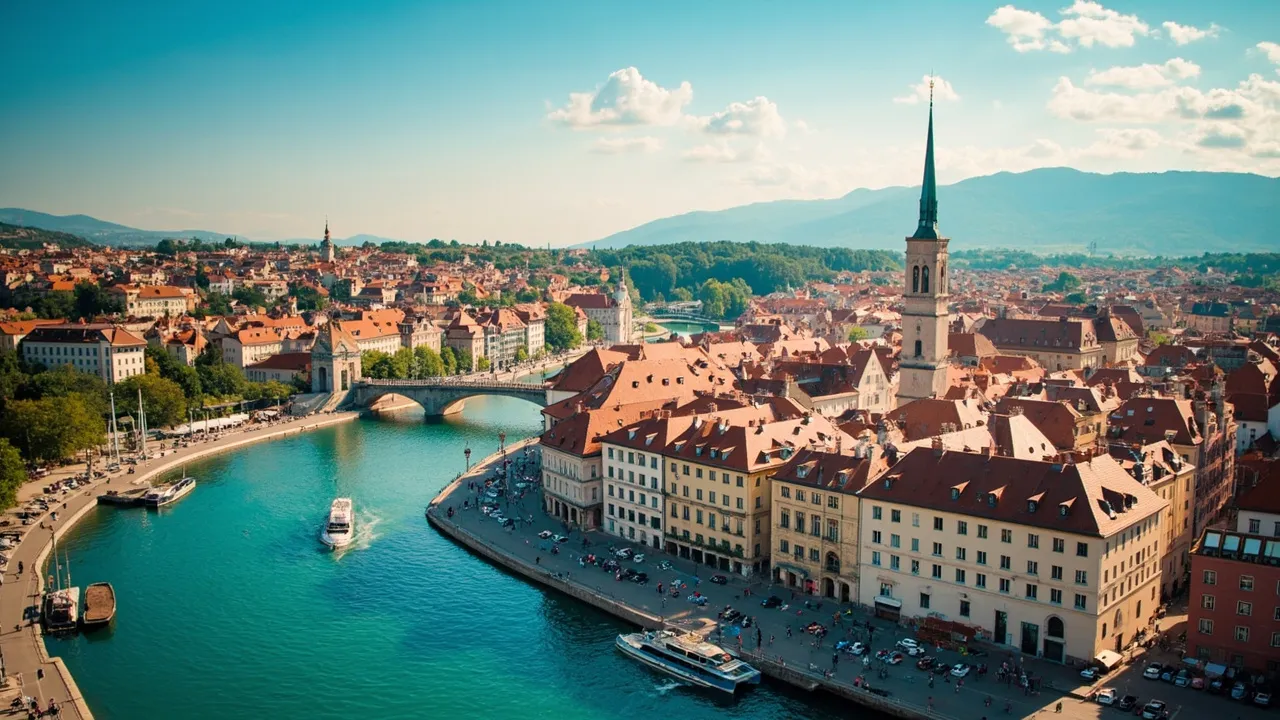
The river loops through the city in gentle curves, passing beneath charming bridges, past riverside cafés, and through green parks. You'll cover more ground than walking but still catch every photogenic corner. Most visitors gravitate toward the stretch between the Dragon Bridge and Trnovo Bridge — both architectural gems worth stopping for.
The Dragon Bridge (Zmajski Most) is non-negotiable. Ljubljana's mascot, the dragon, guards the structure's corners, and there's something deeply satisfying about crossing over it on a bicycle while the morning sun catches the river below.
Lunch: Sample Traditional Slovenian Fare
By now, you'll have worked up an appetite. Head to the Central Market (Osrednja tržnica), a vibrant covered market where locals shop for fresh produce, cheese, and cured meats. The upper level hosts a rotating selection of casual eateries where you can grab a plate of jota (a hearty bean and sauerkraut stew) or žlikrofi (dumplings similar to Italian gnocchi) without spending a fortune.
Alternatively, wander the side streets off Prešernov Trg and duck into any restaurant with a terrace. The quality is consistently high, and prices are refreshingly reasonable compared to other European capitals.
Afternoon: Art, Museums, and Metelkova
After lunch, immerse yourself in Ljubljana's art scene. The National Gallery houses Slovenia's most important works, including paintings by the celebrated impressionist Ivana Kobilica. For contemporary art, the Museum of Modern Art (Moderna galerija) showcases works from the 20th century to today.
But the real adventure awaits at Metelkova. This former military barracks has been squatted, reclaimed, and transformed into an autonomous cultural zone teeming with galleries, clubs, bars, and studios. The architecture alone — a mix of Art Nouveau and brutalist additions — is worth the visit. Come evening, it transforms into one of the city's liveliest nightlife spots.
Insider tip: Check the Metelkova website or ask at your accommodation about any exhibitions or events happening during your visit. The programming changes regularly.
Evening: Sunset and Riverside Dining
As the afternoon fades, make your way to the castle hill for panoramic views over the terracotta rooftops. You can hike up through the old town or take the funicular railway for a few euros. Either way, arrive about an hour before sunset to secure a prime viewing spot on the castle terrace.
After the sun drops, descend into the Old Town for dinner. The riverside restaurants come alive in the evening, their lights reflecting off the Ljubljanica. Order a bottle of Slovenian white wine — the country's Friuli-Venezia region produces excellent Pinot Grigio and Ribolla Gialla — and settle in for a leisurely meal.
For something special, book a table at TaBar or Sestica, two restaurants that have earned national acclaim for elevating Slovenian cuisine while honoring local traditions.
Day Two: Deeper Into the Local Experience
Morning: The Triple Bridge and Around
Start day two with a leisurely morning walk through the sections you might have rushed through on day one. Revisit the Triple Bridge and climb the hill to the Cathedral of St. Nicholas — its bronze doors, added in the 1990s, depict Ljubljana's Christian history in surprisingly modern style.
From there, wander through the Old Town's hidden passages. Ljubljana rewards those who stray from the main paths. Behind unassuming doorways, you'll find small art galleries, vintage bookshops, and artisan workshops selling everything from handmade ceramics to locally designed jewelry.
Mid-Morning: Cankarjev Dom and the Cultural Quarter
Head to Cankarjev Dom, Slovenia's largest cultural and conference center, for a dose of performing arts or visual exhibitions. The building itself is an architectural statement — its bold design caused controversy when it opened in the 1980s, and it remains a symbol of modern Slovenian cultural ambition.
Just steps away, the National Museum of Slovenia and the Museum of Natural History occupy neighboring buildings. If you didn't squeeze in Metelkova yesterday, this is your backup opportunity to dive into Slovenian art and history.
Lunch: The Market and Beyond
Return to the Central Market for a different experience — try the outdoor section where vendors sell freshly prepared dishes from their stalls. The ** burek** (a flaky Balkan pastry filled with meat, cheese, or spinach) is a beloved grab-and-go lunch, best eaten standing at a counter like a local.
For a lighter option, seek out one of the city's juice bars or the growing number of healthy café options near the university district.
Afternoon: Beyond the Center
On your second afternoon, venture slightly outside the tourist core. Take tram line 1 or 2 (or simply walk — it's about 20 minutes) to Tivoli Park, Ljubljana's sprawling green lung. The park offers lakes, statues, tree-lined paths, and the Museum of Contemporary Art Metelkova branch, housed in a former army barracks with impressively restored interiors.
Another option: take a short bus ride to Lake Ljubljana (Ljubljansko jezero), a nature reserve popular with cyclists and birdwatchers. The path around the lake makes for a peaceful afternoon, especially in spring when wildflowers dot the shoreline.
Evening: Farewell to Ljubljana
For your final dinner, seek out a restaurant in the ** Špica** district, where the Ljubljanica splits into multiple channels and the atmosphere is particularly romantic at dusk. Restavracija Zemono and Restavracija AS are local favorites that showcase how sophisticated Slovenian dining has become.
If your departure is early the next day, take a final evening stroll along the river. The city lights, the sound of water, and the comfortable hum of café terraces make it the perfect farewell to a city that quietly, confidently, steals hearts.
Practical Information for Your Visit
Getting there: Ljubljana's Jože Pučnik Airport connects to major European hubs. The shuttle bus (LPP line 28) runs every hour and takes about 40 minutes to the city center. Trains from Austria, Italy, and Croatia also arrive regularly.
Getting around: The city center is entirely walkable. Public buses are efficient if you need to reach areas like Tivoli or the lake. Cycling is popular and safe on designated paths.
Best time to visit: Late spring (May-June) and early autumn (September-October) offer pleasant temperatures, fewer crowds, and blooming or golden scenery respectively. Winter has its own charm — Christmas markets transform the Old Town into a fairytale setting.
Budget: Ljubljana is more affordable than Western European capitals but pricier than its Balkan neighbors. Budget travelers can eat well on 40-50 euros per day; mid-range visitors should plan for 80-120 euros daily including accommodation, meals, and activities.
Language: Slovenian is the official language, but English is widely spoken, especially among younger locals and in tourist areas. Learning a few words of greeting in Slovenian ("živijo" for hello, "hvala" for thank you) is always appreciated.
Final Thoughts
Ljubljana won't overwhelm you with famous landmarks or tourist trap attractions. What it offers instead is subtler and, in many ways, more rewarding: a city that feels genuinely alive, where architecture and nature coexist beautifully, where a meal can last three hours and nobody minds, and where every corner reveals something worth pausing for.
Two days isn't enough — and that's the point. Leave Ljubljana planning your return, and you'll find yourself daydreaming about it long before you board the plane home.
Have you visited Ljubljana? Share your favorite spots in the comments below. And for more European city guides, check out our complete Slovenia travel guide.