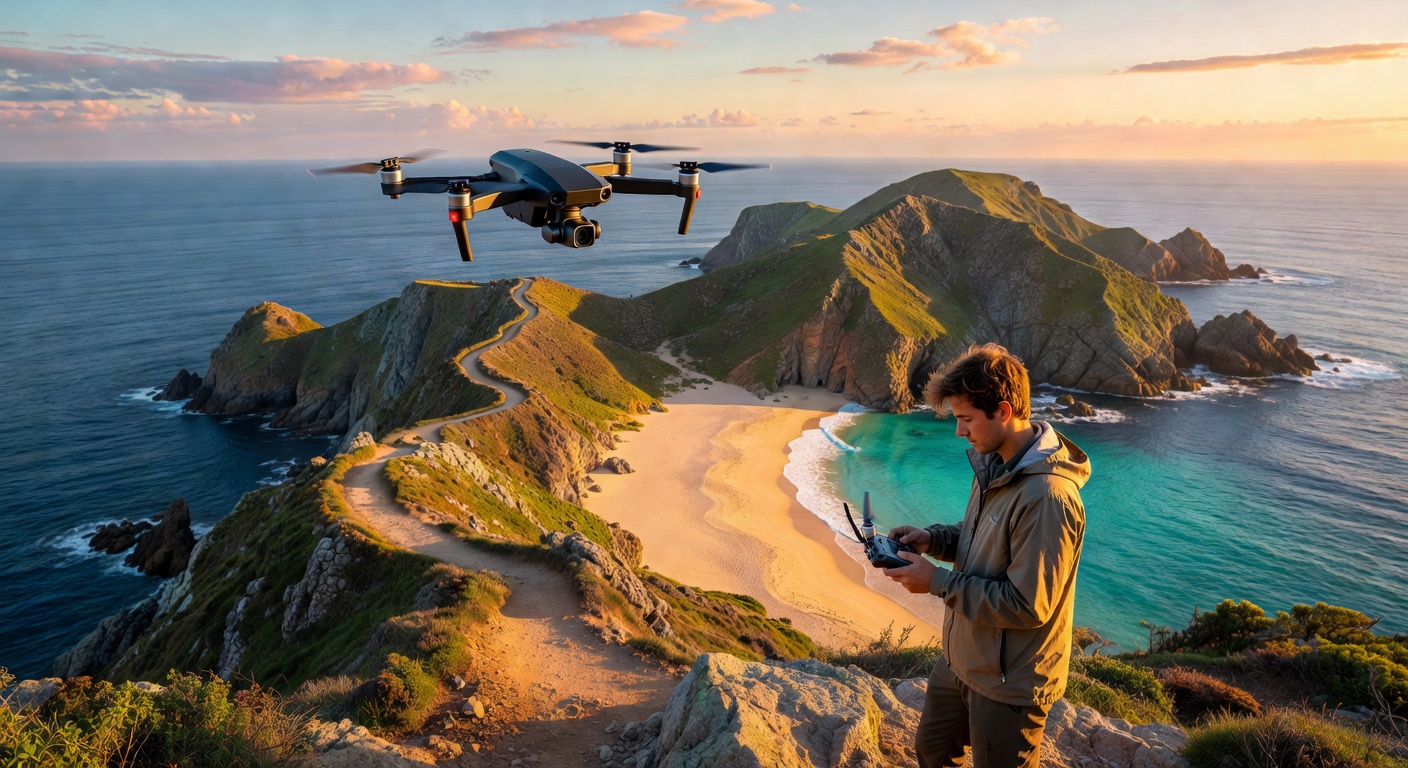
The Rise of Travel Drones
Let's be honest—the travel photos we see on Instagram are often taken from angles regular cameras simply can't achieve. Drones have changed the game for travel photography, allowing adventurers to capture sweeping landscape shots, unique destination perspectives, and memories that traditional cameras miss entirely.
But here's the real question: do you actually need one for your trips?
Why Travelers Are Adding Drones to Their Packing Lists
Unique perspective on destinations
Drones let you showcase landmarks and landscapes in ways that ground-level photography never could. That aerial view of a coastal town or mountain valley? Game-changing for your travel content.
Lightweight and portable options
Modern travel drones weigh as little as 200-250 grams, making them practical for backpackers and minimalist travelers. They fit in a day pack without requiring dedicated luggage space.
Better storytelling
Video and photos from above create dynamic travel narratives. Instead of just showing "I was here," drones help you show where "here" actually is in the broader landscape.
The Practical Reality Check
Regulations vary everywhere
This is the biggest consideration most travel bloggers gloss over. Different countries have vastly different drone laws. Some nations require permits, others ban them outright in certain areas, and many have strict altitude and distance restrictions. Always research local regulations before packing your drone.
Battery life matters more than specs
A drone that flies for 20 minutes sounds great until you're on a time-limited tour or hiking excursion. Real-world flight times are often shorter than advertised, especially in wind or cold weather.
The learning curve is real
Quality aerial shots require practice. Your first few flights probably won't produce the Instagram-worthy content you're imagining. Plan to spend time learning before your trip if possible.
What to Consider Before Buying
Your travel style
If you're a quick city-hopper hitting 5 countries in 2 weeks, a drone adds complexity. If you're doing longer stays with time for creative pursuits, you have more flexibility.
Where you're traveling
Beach destinations, national parks, and mountain regions offer incredible aerial photography opportunities. Dense cities with restricted airspace? Less practical.
Your current tech comfort level
Drones require basic tech knowledge—smartphone connections, app navigation, and understanding flight mechanics. If you struggle with standard travel tech, the learning curve might frustrate you.
Budget-Friendly Alternatives
Not everyone needs to own a drone. Consider these options:
- Rent locally - Many destinations now offer drone rentals with local guides who know the regulations
- Hire a drone operator - For important trips, paying a local photographer to capture aerial footage might deliver better results
- Use smartphone stabilizers - Gimbals and phone mounts create surprisingly dynamic shots for a fraction of the cost
- Leverage AI tools - Modern photo editing can simulate aerial perspectives in post-processing
Making the Decision
Before investing in drone technology, ask yourself:
- Will I actually use this regularly, or just on special trips?
- Do I have time to learn and practice?
- Am I willing to research drone laws for each destination?
- Is this the best way to capture my travel memories, or am I just following a trend?
If you're genuinely passionate about aerial photography and willing to handle the regulatory complexity, a quality travel drone can absolutely enhance your adventures. If you're considering it because it looks cool online, you might find that smartphone photography and rented local services deliver better value.
The Bottom Line
Travel drones aren't essential gear—they're optional tech that works best for specific travelers with specific goals. The best camera is still the one you actually use, and sometimes that's just the one in your pocket.