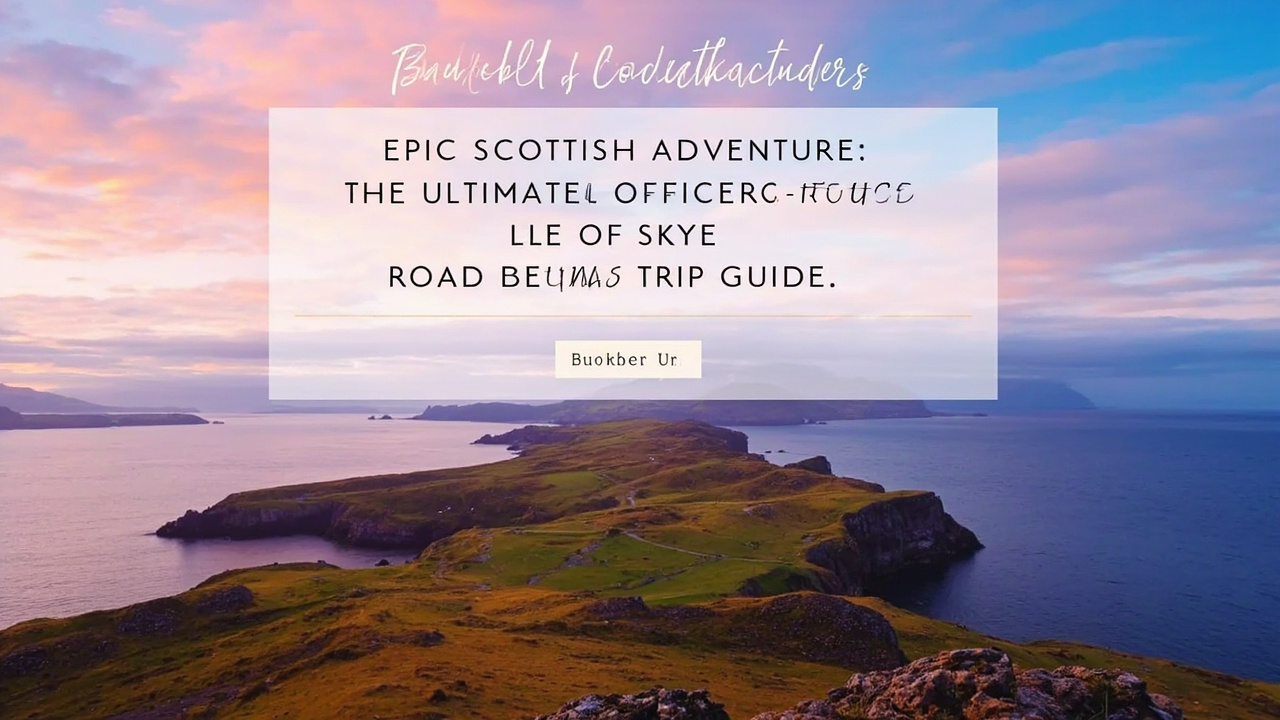
Why This Road Trip Should Be on Your Bucket List
Let's be honest: Scotland doesn't do subtle. From the moment you leave Edinburgh's cobblestone streets and point your car north, the landscape transforms into something that feels almost mythological—rolling green hills giving way to rugged mountains, ancient castles perched on cliffs, and lochs so still they mirror the clouds above.
The drive from Edinburgh to the Isle of Skye covers roughly 215 miles and takes about five to six hours without stops. But here's the thing—you absolutely should not rush this journey. The real magic happens in the detours, the tiny villages, and those spontaneous stops when you round a bend and suddenly find yourself staring at a view that steals your breath away.
This guide covers the practical stuff you need to know—routes, stops, timing, and insider tips—while helping you understand why this particular road trip has captured travelers' imaginations for decades.
Planning Your Route: The Classic Way
Most travelers take the A84 and A82 through the Trossachs and toward the western coast. This route takes you through Stirling (where you can spot Stirling Castle looming dramatically on its hill), past the bonnie banks of Loch Lomond, and through the atmospheric Glencoe valley.
The smart approach: Break this trip into at least two days. Day one gets you to somewhere around Glencoe or Oban, letting you explore at a relaxed pace. Day two takes you to Skye itself, with stops along the way.
Essential Stop #1: Glencoe
Glencoe isn't just a pretty valley—it's got gravitas. In 1692, the MacDonald clan suffered the infamous Massacre of Glencoe, and walking through these mountains, you can almost feel the weight of that history. The A82 cuts right through the heart of the glen, with plenty of pull-offs for photos. The Three Sisters rock formation is particularly stunning in morning light.
Pro tip: Stop at the Glencoe Visitor Centre for maps and local insight. The café serves decent coffee and excellent soup—perfect fuel for the road ahead.
Essential Stop #2: The Road to the Isles
After Glencoe, the A82 continues toward Fort William (home to Britain's highest mountain, Ben Nevis, if you want to tack on an extra adventure), then follows the Great Glen toward Inverness. But for the Skye trip, you'll turn west toward Mallaig on the A830—famously known as the Road to the Isles.
This stretch is genuinely magical. You pass through tiny villages, catch glimpses of islands in the Minch (the sea channel separating Scotland from the Outer Hebrides), and eventually reach the village of Glenfinnan, where the famous Harry Potter viaduct crosses the valley. Yes, the same bridge the Hogwarts Express chugs across in the films.
Insider tip: There's a small parking area near Glenfinnan Monument where you can watch the Jacobite Steam Train pass through twice daily (usually around 10 am and 2 pm in peak season). It's worth the wait.
Crossing to Skye: The Mallaig Ferry
Here's where your journey gets a bit more interesting. To reach the Isle of Skye from the mainland, you have two options:
Option 1: The Mallaig to Armadale ferry (25-30 minutes) This scenic little ferry runs multiple times daily and offers wonderful views of the Small Isles and, on clear days, glimpses of the Cuillins on Skye. In summer, book ahead. In shoulder season, you can often just turn up.
Option 2: The Skye Bridge at Kyle of Lochalsh The bridge connects the mainland to the village of Kyleakin on Skye's east coast. This route adds time but lets you approach Skye from a different angle. The drive through the village of Plockton is gorgeous, and you might spot seals basking on the rocks.
My recommendation: Take the ferry one way and the bridge the other. This creates a logical loop and lets you experience both approaches.
Your First Day on Skye: The Southern Half
Once you reach Skye's southern coast, the island opens up like a storybook. Here are the must-see spots:
Sleat Peninsula
The southernmost arm of Skye is often called the "Garden of Skye" for its gentler, greener landscapes. It's less dramatic than the north but offers beautiful coastal scenery, small beaches, and the lovely village of Armadale.
Don't miss: Armadale Castle, Gardens, and Museum—it's the ancestral seat of the Clan MacDonald of Sleat, and the gardens are surprisingly lush.
Broadford and the Central Road
The A87 runs through Broadford, Skye's largest village and your practical hub for supplies, petrol, and food. Stock up here before heading to more remote areas.
The Talisker Distillery
Near the village of Carbost, on Skye's west coast, this is the island's only whisky distillery. Tours are available (booking essential), and even if you're not a whisky fan, the dramatic setting—backed by the Cuillin mountains—makes it worth a visit.
Day Two: Chasing Waterfalls and Mountain Views
Skye's northern half delivers the island's most iconic landscapes. Here's how to structure your second day:
Morning: The Fairy Pools and Glen Sligachan
Start early to beat the crowds at the Fairy Pools, a series of crystal-clear pools and small waterfalls at the foot of the Cuillins. The walk is relatively easy (about 3 miles round trip) and rewards you with impossibly blue water.
Practical note: The car park fills by 9-10 am in summer. Go earlier, or accept that you'll be sharing the experience with many other visitors.
After the Fairy Pools, continue through Glen Sligachan—the valley that separates the Black Cuillin from the Red Cuillin mountains. The path toward Sligachan is one of the most photographed spots on the island, with a stone bridge crossing a rushing river and mountains rising dramatically on either side.
Afternoon: The Old Man of Storr and Portree
The Storr is a massive landslip area on Skye's eastern coast, and its most famous feature is the Old Man of Storr—a towering rocky pinnacle that's become Skye's most recognizable landmark.
Walking tip: The main path goes right to the Old Man viewpoint (about 1.5 hours round trip), but the real reward is exploring the broader area. The Quieter path to the left takes you through the "Cathedral" rock formations and offers more space to spread out.
End your day in Portree, Skye's main town, for dinner and a wander along the harbor. The Colorful houses lining the harbour make for excellent evening photos, and the pubs serve decent local food and, of course, plenty of whisky.
Evening Detour: The Quiraing (if energy permits)
If you're still hungry for more, the Quiraing is an absolute must—but save it for evening if possible. This mind-bending landslip on Skye's northern tip features rock spires, hidden plateaus, and paths that feel genuinely alien.
The magic of the Quiraing comes with low light. An evening visit (or an early morning one) when the tour buses have departed reveals a place that feels ancient and otherworldly. The full circuit walk takes 2-3 hours, but even a short walk to the first viewing point delivers incredible vistas.
Where to Stay: Accommodation Options
Here's the honest truth: accommodation on Skye books up months in advance, especially during summer (May through September). This is not an exaggeration.
Your options:
- Hotels and guesthouses: Primrose Cottage in Portree, The Skye Inn, and various B&Bs offer comfortable stays, but expect to pay premium rates and book early.
- Self-catering cottages: Often the best value, especially for groups or families. Check sites like Airbnb and Sykes Holiday Cottages.
- Camping: Skye has several well-maintained campsites. The Oneills at the Fairy Pools is popular but can feel crowded. Wild camping is legal in Scotland under the Scottish Outdoor Access Code—be responsible, leave no trace.
- On the mainland: Many travelers use Fort William, Glencoe, or even Inverness as bases and make Skye a long day trip. This works logistically but means you'll miss those magical evening and early morning moments on the island.
Essential Driving Tips for Scottish Roads
Scottish country roads can be narrow, winding, and occasionally intimidating. Here's what you need to know:
Passing places are your friends. When you see a square of gravel or extended pavement on your left, that's a passing place. Use them. If a car approaches, pull into the next one you see.
Beware of single-track roads. Many roads on Skye and throughout the Highlands are single-track with passing places. Don't block them—if you see another car approaching, look for a passing place and use it.
Watch for wildlife. Sheep wander freely on many roads. They usually move when you approach, but drive cautiously, especially at night.
Give yourself time. What looks like a 20-minute drive on the map can easily take 40 minutes on these roads. Build in buffer time.
Best Time to Visit
Honestly? May and June offer the sweet spot—longer days, fewer crowds than midsummer, and the famous "biting midges" (tiny Highland bugs that can ruin outdoor evenings) haven't reached peak annoyance yet.
That said, Skye's appeal changes dramatically with the seasons:
- Spring (April-May): Lambs in fields, longer days, potential for both sunshine and snow.
- Summer (June-August): Peak season, warmest temperatures, longest days (light until nearly 11 pm), but also most crowded and buggy.
- Autumn (September-October): Fewer visitors, beautiful colors, chances of dramatic storms and moody skies. Some facilities may have reduced hours.
- Winter (November-March): Dramatic but challenging. Some roads and attractions close, daylight hours are short, but the landscapes are hauntingly beautiful, and you'll have the island almost to yourself.
Packing Essentials
Even in summer, Scottish weather is notoriously changeable. Pack layers, a waterproof jacket, and sturdy walking shoes. Here's my essentials list:
- Waterproof jacket (not just water-resistant)
- Layers for both warm and cold conditions
- Walking boots or sturdy shoes (paths can be muddy)
- Bug spray (especially for summer)
- A flashlight/headlamp (useful for evening walks and winter driving)
- Camera or smartphone with good storage
- Cash (some remote areas have poor card signal)
- Printed booking confirmations for ferries and accommodations
The Bottom Line
This road trip delivers one of Britain's great journeys. From Edinburgh's cultured streets to Skye's elemental landscapes, every mile offers something worth seeing. The key is slowing down, embracing the unpredictable weather, and accepting that some of the best moments will be the ones you didn't plan.
Pack your sense of adventure, leave plenty of room in your schedule, and get ready for landscapes that will stay with you long after you return home.
Have questions about planning your Edinburgh to Skye road trip? Drop them in the comments below, and I'll do my best to help you plan the perfect Scottish adventure.
Ready to start planning? Check accommodation availability and book your ferry crossing early—your future self will thank you.