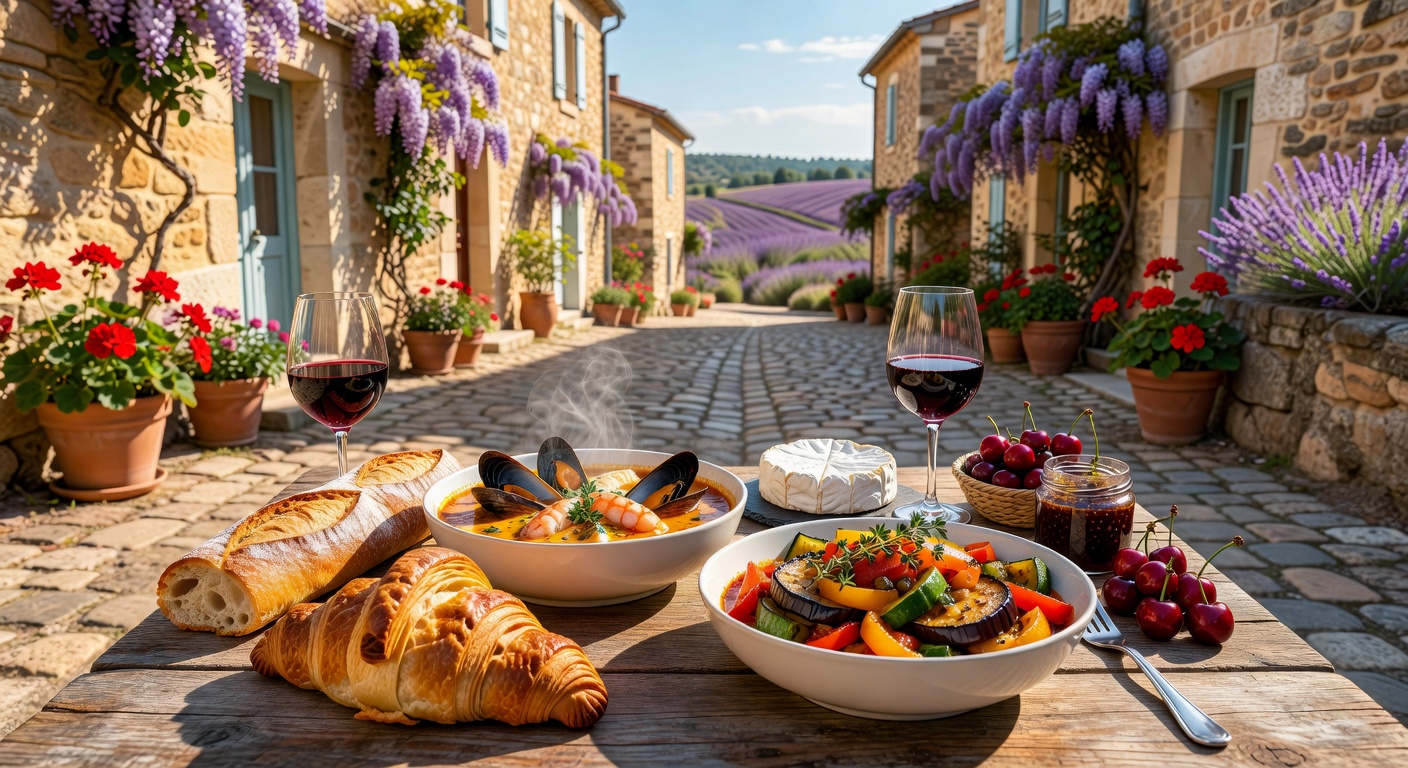
French Food Travel Guide: Must-Try Dishes Before Your Next Trip to France
France isn't just a destination—it's a gastronomic pilgrimage. While wine tours and museum visits are great, the real magic happens when you're biting into a warm pain au chocolat at a local boulangerie or sharing a bubbling dish of French onion soup with strangers at a neighborhood bistro.
I've spoken with countless travelers who say their favorite France memories aren't from landmarks—they're from meals. The key to eating well in France isn't knowing the most expensive restaurants; it's understanding what each region does best and where locals actually go.
Start Your Morning Right: Breakfast & Pastries
Croissants and Pain au Chocolat
Your French breakfast starts early. Skip the hotel buffet and head to a boulangerie before 9 AM. A proper croissant should be buttery, flaky, and slightly warm—never pre-made or wrapped in plastic.
Pro tip: Ask for a "pain au chocolat" (chocolate-filled pastry) instead of a croissant if you want something more indulgent. The French eat these standing up at the counter with an espresso. It's faster, cheaper, and more authentic than sitting at a café table.
Crème Brûlée French Toast
Some dishes blur breakfast and dessert. French toast made with thick brioche bread, topped with caramelized sugar, is a hotel breakfast staple—but try making it a mid-morning snack at a pâtisserie instead.
Lunch Classics Worth Seeking Out
French Onion Soup (Soupe à l'Oignon)
This rustic classic was originally peasant food—caramelized onions, beef broth, a crusty bread slice, and melted Gruyère cheese. Order this at a traditional bistro, not a tourist trap. Price range: €8-15.
Where to find it: Marais district in Paris, or any small-town auberge.
Coq au Vin
Chicken braised in red wine with mushrooms and pearl onions. This Burgundy-region specialty tastes even better on day two, which is why bistros prepare it in batches. Order it with crusty bread to soak up the sauce.
Croque Monsieur & Croque Madame
The ultimate French sandwich—ham, cheese, béchamel sauce on buttered bread, then grilled until crispy. Add a fried egg on top and it becomes a Croque Madame. At €6-10, this is honest, satisfying French food.
Dinner Dishes That Define French Cuisine
Beef Bourguignon
Julia Child made this iconic, but it's not just for fancy restaurants. Many family-run bistros serve authentic versions—beef stewed in red wine, mushrooms, and pearl onions. It's hearty, warming, and tastes like home-cooking elevated.
Cassoulet
Head to southwestern France (Toulouse, Carcassonne) for this rustic bean stew with confit duck, sausage, and pork. It's heavy, it's rich, and it's absolutely worth the calorie splurge. Traditional cassoulet has been simmering for centuries with minimal changes.
Bouillabaisse
A Provençal fish stew from Marseille, bouillabaisse is expensive but worth experiencing once. It's traditionally served with rouille (garlic mayo) and crusty bread. Look for restaurants near the harbor where fishermen actually dock their boats.
Duck Confit (Confit de Canard)
Slow-cooked duck leg in its own fat, served crispy-skinned with potatoes. Once considered peasant food, it's now a French delicacy. Found throughout southwestern France, especially in Périgord.
Steak Frites
The simplest dish, done perfectly. In France, a steak frites means high-quality beef, perfectly seasoned, served medium-rare with hand-cut fries and béarnaise sauce. It's often cheaper than you'd expect (€15-20).
Regional Specialties Worth the Detour
Crêpes (Brittany)
Sweet or savory, these paper-thin pancakes are Brittany's gift to France. Savor them with Nutella and strawberries, or ham and gruyère. Street crepe stands are cheap, quick, and delicious.
Raclette & Fondue (Alps)
If you're visiting the French Alps, order raclette (melted cheese scraped onto bread) or fondue. These warming dishes are social events—you'll cook and eat together with your dining companions.
Tarte Tatin (Île-de-France)
An upside-down apple tart with caramelized apples and flaky pastry. This Parisian invention pairs perfectly with crème fraîche or vanilla ice cream.
Ratatouille (Provence)
A vegetable medley of eggplant, zucchini, peppers, and tomatoes. While it can be mediocre, a proper ratatouille from a Provençal restaurant is pure summer on a plate.
Smart Eating Strategies in France
Hunt for "Formule" and "Menu" Options
French restaurants offer fixed-price meal deals (called "formule" or "menu") at lunch—typically 3 courses for €12-25. This is how locals eat affordably. Dinner menus cost more but still offer value.
Eat Like a Local: Timing Matters
- Breakfast: 7-9 AM at a boulangerie
- Lunch: 12-2 PM (many restaurants close between 2-6 PM)
- Dinner: 7-9 PM (later service available in cities)
Restaurants are busiest at these times, which is actually a good sign of quality.
Cheese, Charcuterie, and Markets
Skip expensive restaurants one night and build a picnic from a market or fromagerie. A €20 spread of artisanal cheese, cured meats, fresh bread, and wine from a local shop beats an overpriced tourist restaurant.
Explore Beyond Paris
Paris food is excellent but expensive. Head to Lyon (the gastronomic capital), Toulouse, Strasbourg, or coastal towns. You'll eat better and spend less.
Budget Breakdown: What to Expect
- Boulangerie breakfast: €3-5
- Street crepe: €4-8
- Casual lunch (formule): €12-18
- Bistro dinner (3 courses): €20-35
- Splurge-worthy Michelin-star meal: €60+
- Market picnic: €15-25
Final Thoughts: Eating France Isn't About Perfection
French cuisine gets mystified. The truth? It's about quality ingredients, proper technique, and respect for tradition. A €6 Croque Monsieur prepared by someone who's made it 1,000 times beats a €50 "deconstructed" version any day.
When you travel through France, eat what's in season, shop at markets, chat with restaurant owners, and remember: the best French meals happen when you're not trying to be fancy. They happen when you're hungry, curious, and ready to try whatever comes out of the kitchen.
Your taste buds will thank you.