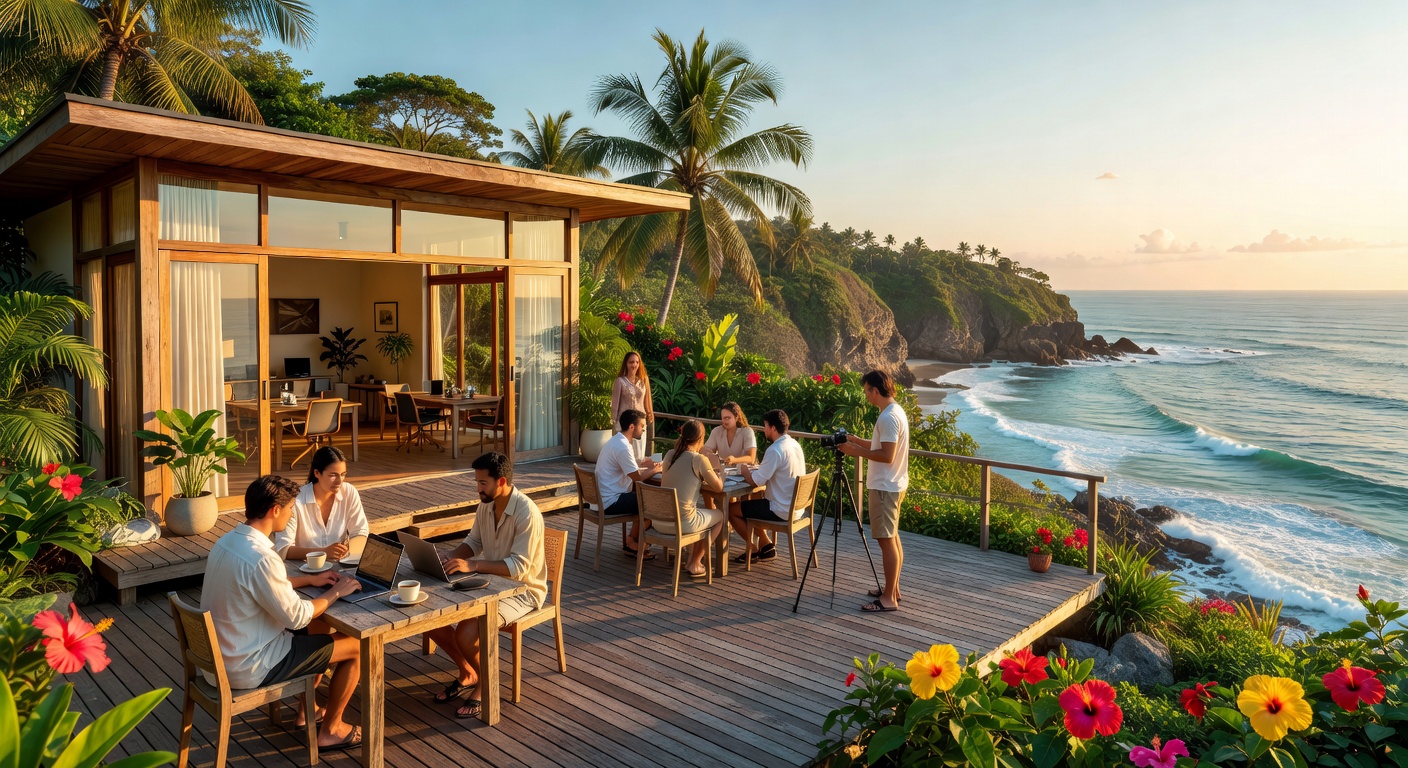
Why Digital Nomads Are Ditching Traditional Accommodations
The digital nomad lifestyle sounds romantic until you're dealing with unreliable WiFi, isolation in a foreign city, or worse—a landlord who questions why you're always home during the day. Traditional travel accommodations weren't built with remote workers in mind, and that gap in the market has created some innovative solutions.
Outsite is one company that's tapped into this need. But before you book your first coliving stay, let's explore what makes it different from your typical Airbnb or coworking space combo.
What Is Outsite (And How Does It Work)?
Outsite operates on a simple premise: combine quality accommodation with built-in community and workspace. Rather than renting a random apartment in a city you don't know, you're booking a room in a carefully curated property where other digital nomads are already living and working.
Think of it as a hybrid between:
- A serviced apartment (you get your own room and bathroom)
- A coworking space (dedicated work areas with solid internet)
- A hostel community (built-in social structure)
Each Outsite location includes high-speed internet (crucial for remote work), furnished rooms, common areas, and regular community events.
The Real Benefits (Beyond the Marketing)
1. Networking That Actually Matters
Unlike staying alone in an apartment, you're surrounded by people who get the nomadic lifestyle. These aren't tourists—they're professionals with similar goals. Real friendships and even business collaborations happen naturally here.
2. No Setup Stress
Moving to a new country is exhausting. Outsite properties come fully furnished with reliable utilities, housekeeping, and management. You literally arrive and start working. No hunting for WiFi routers or arguing with landlords over deposits.
3. Flexibility Without Commitment
Most Outsite bookings are monthly, but with shorter options available. You're not locked into a year-long lease. If a location doesn't work out, you can move on.
4. Work Environment Designed for Productivity
Proper desks, chairs, good lighting, and dedicated work zones. Many colivings are scattered across multiple floors with shared tables. Outsite properties typically have quiet work zones, which matters when you're on client calls.
5. Location Intelligence
Outsite properties are strategically placed in cities where digital nomads actually want to be—places with good weather, affordable living costs, and already-established expat communities.
The Honest Downsides
Let's be real: it's not perfect for everyone.
Price Premium
Outsite costs more than finding your own apartment. You're paying for convenience, community, and managed services. Budget $1,200–$2,000+ monthly depending on location. That's higher than long-term Airbnbs in most nomad hubs.
Location Limitations
Outsite doesn't operate in every city. If you're determined to work from a small village or specific destination, you might be out of luck.
Communal Living Isn't for Introverts
While there's no forced socializing, the environment assumes you want community interaction. If you prefer complete solitude, a private apartment might suit you better.
Potential for Homogeneity
You might meet incredible people—or find yourself in a bubble of similar-minded remote workers from the same countries.
Outsite vs. Your Other Options
| Factor | Outsite | Airbnb | Furnished Apartment | Coworking + Hostel | |--------|---------|--------|-------------------|-------------------| | Internet Reliability | Excellent | Variable | Good | Good | | Community | Built-in | None | None | Yes | | Price | $1,200+ | $600–$1,200 | $700–$1,200 | $800–$1,500 | | Flexibility | Good (monthly) | Flexible | Less flexible | Flexible | | Work Setup | Optimized | DIY | DIY | Yes | | Time to Settle In | Fast | Medium | Medium | Fast |
Is Outsite Right For You?
Ask yourself these questions:
- Do you value community? If yes, Outsite wins.
- Are you tight on budget? Long-term Airbnbs or local apartments are cheaper.
- Do you need reliable internet immediately? Outsite takes the guesswork out.
- Are you staying 1–3 months? Perfect timeframe for Outsite bookings.
- Do you want to avoid rental red tape? Outsite handles everything.
Practical Booking Tips
1. Start with their Trial Stay
Outsite offers discounted first stays. Use this to test if the concept works for you before committing longer.
2. Check Dates Carefully
Availability varies by season and location. Popular destinations (like Lisbon, Medellín, and Bali) fill up during peak nomad season (Oct–April).
3. Look Beyond the Flagship Locations
Lesser-known Outsite properties might offer better value and smaller, tighter communities.
4. Consider Off-Season Booking
Prices drop during shoulder seasons. May in Portugal or September in Mexico can be excellent timing with cheaper rates.
5. Ask About Package Deals
If you're planning a longer stay (3+ months), negotiate. Many coliving spaces offer discounts that aren't published online.
The Bottom Line
Outsite solves real problems for remote workers: isolation, unreliable internet, and the chaos of moving between cities. If you're someone who values community, hates logistical headaches, and has the budget, it's legitimately worth trying.
However, it's not the "best" place for everyone. Budget-conscious nomads, introverts, or people with specific destination requirements might get better value elsewhere.
The smartest approach? Use Outsite as part of your rotation. Spend a few months in an Outsite during your first time in a region to build community and get settled, then try living independently if you want. Many successful digital nomads do exactly this.