Portuguese Food Guide: 15 Authentic Dishes Worth Traveling For
If you're planning a trip to Portugal, you're in for a gastronomic treat. The Portuguese know how to eat well, combining fresh local ingredients with time-honored cooking methods to create dishes that are both humble and unforgettable. Whether you're exploring Lisbon's bustling food markets or enjoying a quiet meal in a coastal village, here are the dishes you absolutely need to try.
The Sweet Start: Pastéis de Nata
Let's begin with Portugal's most iconic export—the Pastel de Nata. These crispy, flaky custard tarts are addictive, and there's a reason they've become synonymous with Portuguese culture worldwide. The contrast between the caramelized, crackling exterior and the creamy custard filling is genuinely magical.
Pro tip: Hit Pastéis de Belém in Lisbon (operating since 1837) for the original recipe, but honestly, you'll find delicious versions at nearly every café and bakery across the country. Grab one with a strong coffee and you've got the perfect Portuguese breakfast.
The National Treasure: Bacalhau
Portugal's most celebrated ingredient is bacalhau—salted cod. The Portuguese have elevated this humble dried fish to an art form, with supposedly 365 different ways to prepare it (one for each day of the year). Whether it's shredded and fried as Bacalhau à Brás or creamed as Bacalhau com Natas, this dish represents centuries of Portuguese fishing heritage.
The beauty of bacalhau is its versatility. You'll find it in casual eateries and fine dining restaurants alike, always prepared with respect for the ingredient and the tradition behind it.
Street Food Essentials
Bifana: The Perfect Handheld Meal
Don't sleep on Portugal's street food scene. The bifana—a simple but satisfying sandwich of thinly sliced pork marinated in garlic and white wine, served on crusty bread with mustard—is pure comfort. It's the kind of food that tastes even better when eaten while walking through cobblestone streets.
Francesinha: Porto's Heavyweight Champion
Head to Porto and order a Francesinha if you're ready for an adventure. This isn't a sandwich for the diet-conscious: thick slices of steak, layered with ham, sausage, and melted cheese, all crowned with a spicy tomato-beer sauce. It's indulgent, messy, and absolutely worth the caloric splurge.
Seafood Dishes That Shine
Portugal's long coastline means seafood appears at nearly every meal, and rightfully so. The quality is exceptional, and the preparations are straightforward—letting fresh ingredients speak for themselves.
Grilled Sardines: Summer on a Plate
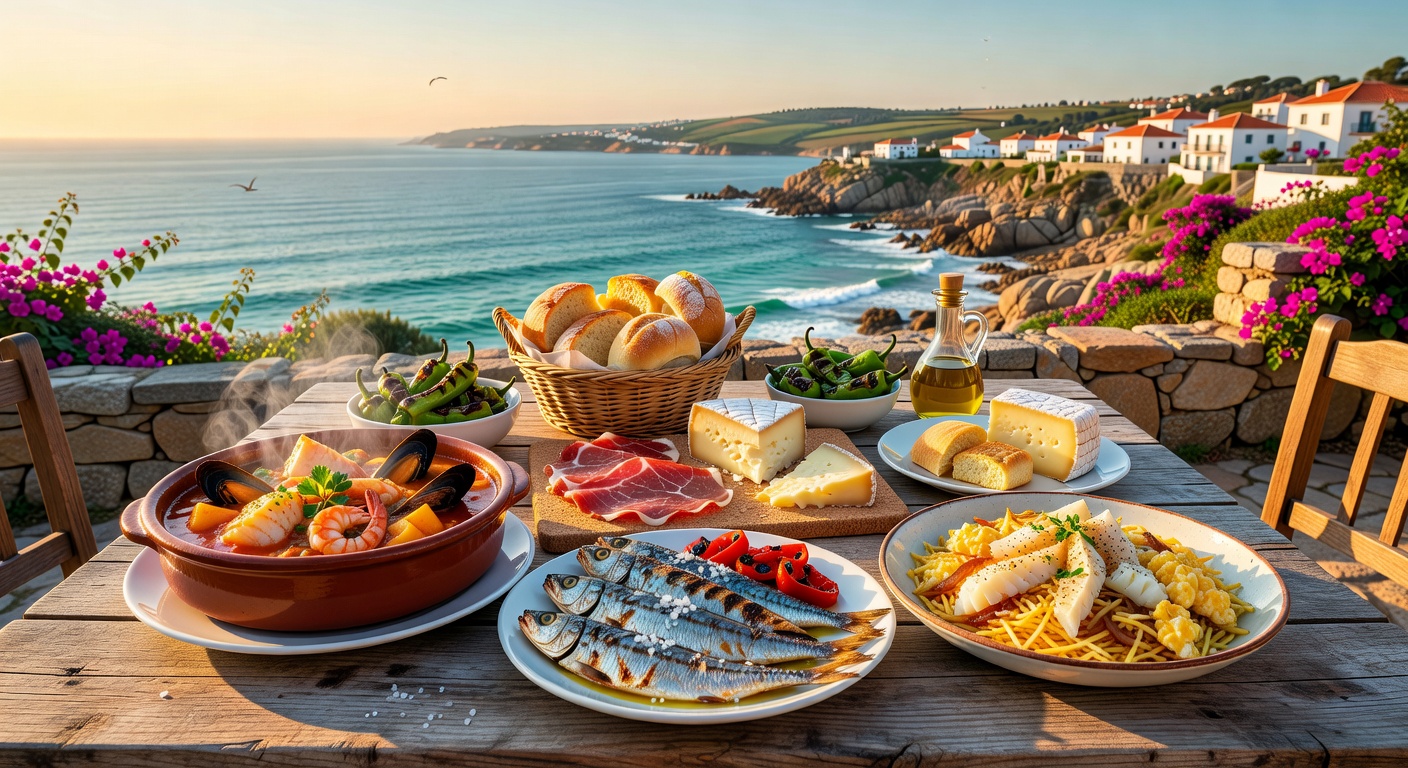
During summer months, Portuguese coastal towns fill with the smoky aroma of grilled sardines. These fish, seasoned simply with salt and lemon, are charred over open flames and served with roasted potatoes. It's seasonal eating at its finest, and a bucket-list experience in itself.
Seafood Rice and Stews
If paella has a Portuguese cousin, it's Arroz de Marisco—a rich, flavorful rice dish loaded with clams, mussels, shrimp, and squid. For something even more elaborate, try Cataplana de Marisco, a seafood stew cooked in a traditional copper pot that looks as impressive as it tastes.
Octopus the Right Way
Polvo à Lagareiro demonstrates how perfectly simple cooking can be: tender octopus, roasted with generous amounts of Portuguese olive oil, garlic, and potatoes. The name itself references the olive press (lagar), highlighting the country's liquid gold ingredient.
Hearty Meat and Stew Traditions
Pork and Clams: The Unexpected Pairing
Carne de Porco à Alentejana might sound odd—pork and clams together—but this Alentejo classic proves that sweet, salty, and savory can coexist beautifully on one plate. The pork is marinated in paprika and white wine, fried with potatoes, then topped with fresh clams. It's a dish that tells the story of Portuguese geography: mountains meeting sea.
Slow-Cooked Warming Stews
When the weather turns cooler, seek out Chanfana, a goat stew from the Beira region that's been slow-cooked with red wine, garlic, and spices until the meat is fall-apart tender. It's the kind of dish that warms you from the inside out and explains why Portuguese comfort food has endured for generations.
The Showstopper: Leitão
If you make it to Mealhada, order Leitão—roasted suckling pig. The crackling skin alone is worth the trip, and the tender, juicy meat justifies the indulgence. This is celebratory food, the kind of dish you remember years later.
Traveling for Food: Practical Tips
Where to eat: Skip overly touristy restaurants in major city centers. Instead, eat where locals eat—neighborhood tascas (casual eateries), family-run restaurants, and food markets. Your hotel or local tourism office can usually point you toward authentic spots.
Timing: Lunch (around 1 PM) and dinner (after 8 PM) are the main meal times. Many restaurants close between meals, so plan accordingly.
Regional variations: Different regions have signature dishes. Porto excels in meat dishes, the Alentejo in slow-cooked stews, and coastal areas in fresh seafood. Try to experience each region's specialties if possible.
Language tip: Most traditional restaurants have limited English menus, but that's often a sign of authenticity. Don't hesitate to ask locals for recommendations or point at dishes other diners are enjoying.
Final Thoughts
Portuguese cuisine doesn't rely on exotic ingredients or complicated techniques. Instead, it celebrates fresh, seasonal ingredients prepared with respect and tradition. The flavors are bold but balanced, the portions generous, and the price points remarkably reasonable compared to other European destinations.
Whether you're sampling pastéis de nata at a Lisbon café, grilling sardines at a beach festival, or diving into a heaping plate of Cozido à Portuguesa, you're tasting centuries of Portuguese culture. That's what makes eating in Portugal so special—it's not just about the food; it's about connection, history, and genuine hospitality.
So book that flight, bring an appetite, and prepare to fall in love with Portuguese food. Your taste buds will thank you.