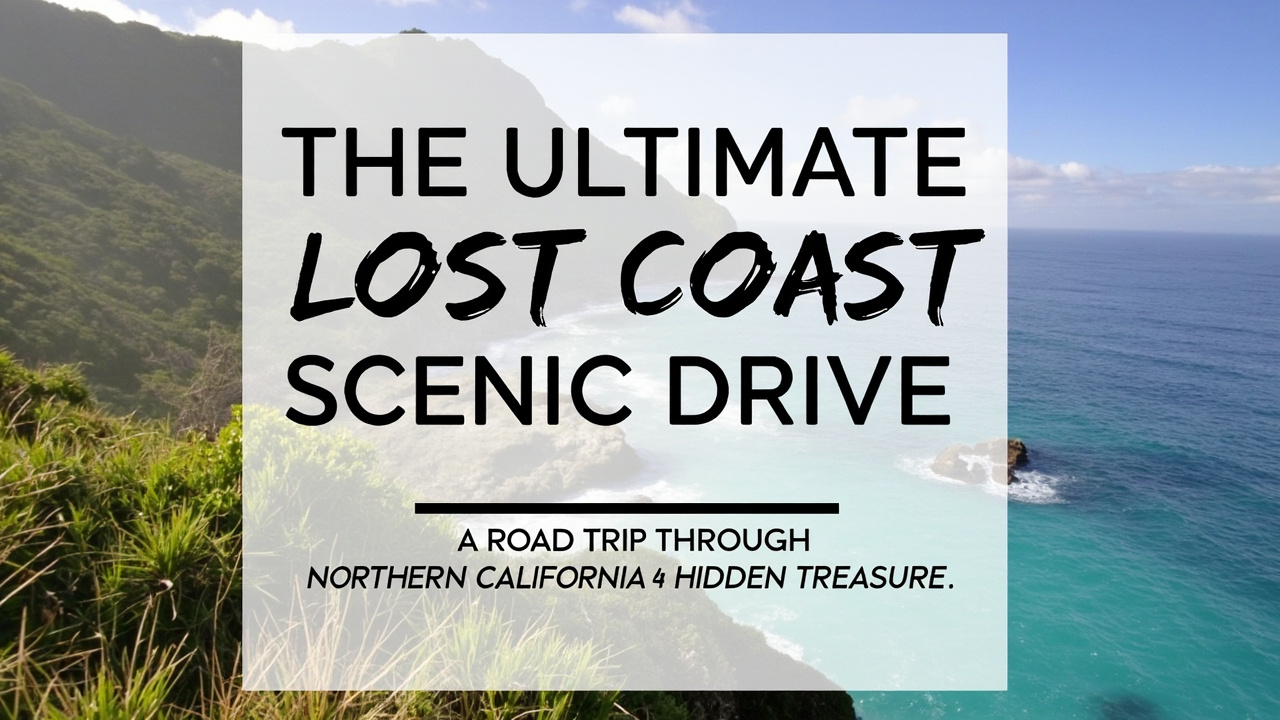
There's something magical about places that refuse to be tamed. The Lost Coast in Northern California is exactly that kind of place—a rugged stretch of shoreline where the mountains literally plunge into the Pacific Ocean, making road access nearly impossible and keeping the masses at bay.
I still remember my first glimpse of that stark black sand meeting churning gray water, the wind whipping my jacket as I stood alone on a beach that felt like the edge of the world. That moment hooked me, and I've been returning to this remote corner of California ever since.
Why the Lost Coast Deserves a Spot on Your Bucket List
Unlike the crowded highways of Southern California or the tourist-heavy routes along Big Sur, the Lost Coast offers something increasingly rare: genuine solitude in a landscape of raw, untamed beauty. Here, you'll find no chain hotels, few gas stations, and minimal cell service. What you will find are pristine beaches stretching for miles, towering redwood groves that make you feel infinitesimally small, and wildlife that regards you as the intruder (because in these parts, you absolutely are).
The drive itself is an adventure. We're talking about a route where the road literally disappears, forcing you to navigate backcountry detours through steep mountain passes. It's not for everyone—but for those seeking authentic wilderness experience, it's absolutely unmatched.
Planning Your Lost Coast Adventure
When to Go
The ideal window is typically June through September, when fog lifts enough to reveal those dramatic coastal views and the notoriously muddy roads become passable. October can work, but you're gambling with weather. Summer temperatures hover in the 60s—pleasant for hiking but bring layers, because that Pacific wind doesn't care about your vacation plans.
What to Pack
Here's where I'll be brutally honest: you need to be self-sufficient out here. I'm talking:
- Plenty of water (at least a gallon per person per day)
- Food for multiple days (services are sparse once you're on the coast)
- A physical map and offline directions (your phone will be useless in many stretches)
- Warm, waterproof layers regardless of what the forecast says
- A full tank of gas before leaving any town
- Emergency supplies including a first aid kit and flashlight
The Route: Beach to Redwoods
The classic Lost Coast loop typically starts from the south, beginning with those iconic black sand beaches near Shelter Cove. From there, the route winds northward through increasingly dramatic coastal scenery before eventually cutting inland through ancient redwood forests.
Stop 1: Black Sand Beach
Your journey should start at one of those dramatic black sand beaches that give this region its otherworldly appearance. The dark sand, created by ancient volcanic activity, absorbs heat and provides stark contrast against white foam and gray sky. Arrive early to have the beach nearly to yourself.
Stop 2: Sea Caves and Tide Pools
Keep your eyes peeled for sea caves carved into the cliffsides. At low tide, the tide pools reveal an entire universe of colorful sea creatures—starfish, anemones, and crabs going about their business completely unbothered by your presence.
Stop 3: The Mountain Detour
Here's where your vehicle needs to be up for the challenge. The official Highway 1 route simply ends here, and you'll need to navigate Route 1 inland to Route 128, climbing through the mountains before descending back to the coast. The road is steep, winding, and occasionally terrifying—but the views from the ridge are absolutely worth white-knuckling your steering wheel.
Stop 4: Redwood Forest Immersion
As you make your way inland, the coast gives way to towering redwood forests. These ancient trees, some over 1,000 years old and 300 feet tall, create a cathedral-like atmosphere that genuinely humbles you. Take time to hike beneath their canopy—it's a spiritual experience that no photograph truly captures.
Camping on the Lost Coast
If your schedule allows, camping here is non-negotiable. There's something about waking up to fog rolling through redwood groves or falling asleep to the rhythm of Pacific waves that no hotel can replicate.
Developed campgrounds are limited, so many visitors opt for beach camping or backcountry sites. If you choose beach camping, be mindful of tide schedules—you don't want to wake up with your tent taking an unintended swim.
Tips From Someone Who's Made the Mistakes
After several trips to this region, here are the things I wish someone had told me:
Your gas tank is never full enough. The nearest gas station could be 50 miles away, and prices reflect that remoteness. Top off at every opportunity.
The fog is part of the experience, not an obstacle to it. Yes, it limits visibility, but there's something mystical about watching it roll through coastal redwoods or shroud the beach in mystery.
Tell someone your plans. With limited cell service and remote terrain, always leave your itinerary with a reliable contact who knows when to raise the alarm if you don't check in.
Respect the wildlife. Seals, whales, and countless bird species call this coast home. Keep your distance and never feed or approach animals.
Pack out everything you pack in. These ecosystems are fragile. Your great-great-grandchildren deserve to see this coastline in the same condition you did.
Final Thoughts
The Lost Coast isn't a destination for everyone, and that's precisely what makes it special. It requires planning, patience, and a willingness to be uncomfortable at times. But for those willing to put in the effort, it offers something increasingly difficult to find: a genuine wilderness experience within a day's drive of millions of people.
Whether you're watching the sun set over black sand beaches or standing in silent awe beneath centuries-old redwoods, this stretch of Northern California will leave its mark on you. It's the kind of place that stays with you long after you've returned to civilization—a reminder that some places still belong to the wild.
So fill up that tank, download your maps, and get ready for an adventure that will redefine what you expect from the California coast. The Lost Coast is waiting, and it's ready to show you something extraordinary.