markdown formatted blog content
Starting Somewhere Unexpected
I arrived in Johannesburg with a backpack, a rough itinerary, and more excitement than sense. What I didn't expect was that this two-month journey through Southern Africa would fundamentally change how I think about travel.
This wasn't a safari in the traditional sense — I wasn't chasing the Big Five from luxury lodge to luxury lodge. Instead, I wanted to understand the region: how these four countries connect, where they diverge, and what life actually looks like for the people who call this part of the world home.
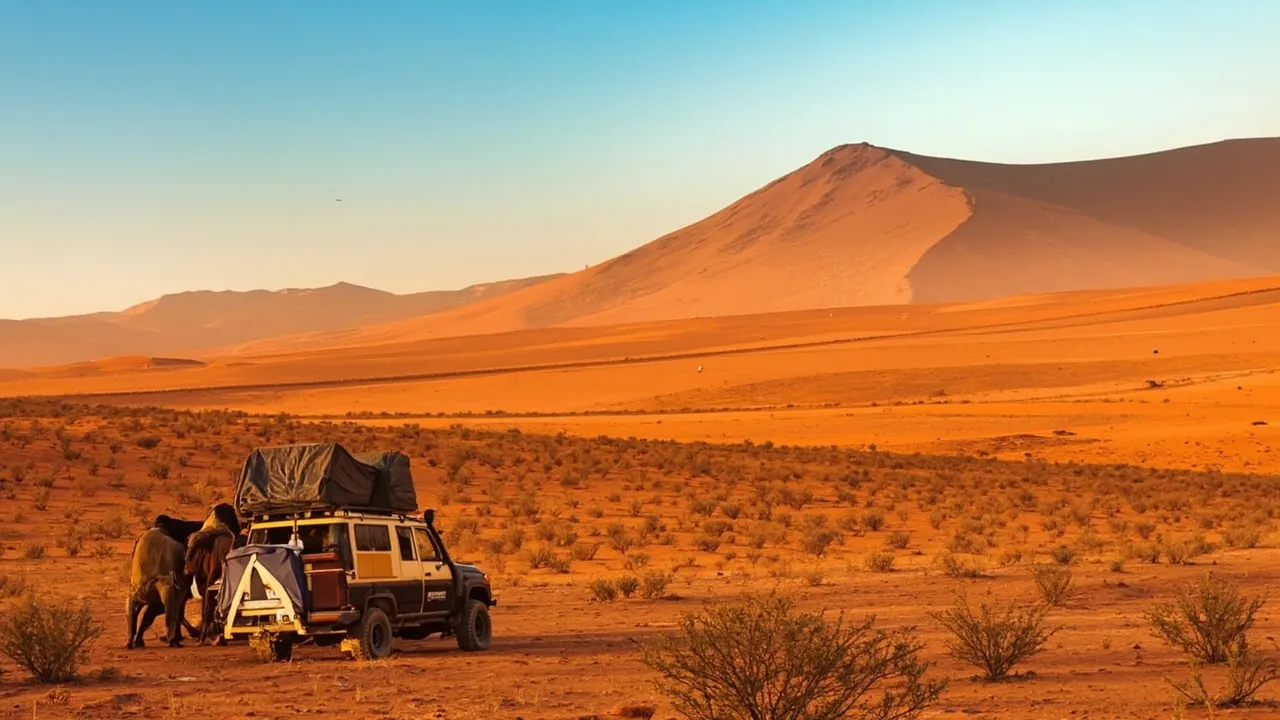
The route took me from the vibrant streets of Cape Town through the dunes of Namibia's edge, into Botswana's wilderness, across to Zambia's Zambezi River, and finally to Zimbabwe's thundering Victoria Falls. It was ambitious. It was exhausting. It was worth every single grueling border crossing.
South Africa: Where It All Began
My journey started in Cape Town, and if you've never been, drop everything and book a flight. Table Mountain alone is worth the trip, but the city offers so much more — the Bo-Kaap neighborhood with its candy-colored houses, the V&A Waterfront's sunset markets, and the wine regions just an hour away.
I spent my first week getting over jet lag and over-preparing. I read every travel forum, watched every YouTube video, and stressed about things that turned out to be completely fine. Here's the truth: South Africa is remarkably accessible for English-speaking travelers. The infrastructure is good, people are friendly, and getting around is easier than you might expect.
I rented a car and drove the Garden Route — a classic for a reason. The coastal towns, the Knysna forests, theadventure activities in Pletten Bay. But I also ventured inland to the Karoo and found myself alone with stars that seemed close enough to touch.
Key tip for South Africa: Don't skip the small towns. Everyone rushes to Cape Town and Johannesburg, but the real magic happens in places like Graaff-Reinet or the tiny coastal villages along the Eastern Cape.
Crossing Into Botswana: The Culture Shock (Good Kind)
Border crossings in Africa are an adventure in themselves. I won't pretend otherwise. After leaving South Africa, I spent four hours at the Botswana border dealing with paperwork, vehicle inspections, and the particular rhythm of government bureaucracy.
But Botswana? Worth every minute.
This country impressed me more than I expected. Gaborone might not win beauty contests, but the country's commitment to conservation and sustainable tourism is remarkable. The Okavango Delta is unlike anywhere else on Earth — you navigate by mokoro (traditional dugout canoe) through channels of papyrus that tower above your head.
I spent three nights on a budget mobile safari. This is the way to do Botswana if you're watching your wallet. The national parks are incredible, wildlife is abundant, and because the country limits tourist numbers, you never feel crowded.
What surprised me about Botswana: How clean and organized everything felt. The roads were excellent, the campsites were well-maintained, and the people were genuinely welcoming without being aggressive about selling you things.
Zambia: The Underrated Gem
Here's where my journey gets personal. Zambia was the country I knew least about, and it ended up stealing my heart.
Livingstone, the town near Victoria Falls, is a backpacker hub for good reason. The falls themselves are best seen from the Zambian side — there's something about watching millions of liters of water cascade over the edge that makes you feel both infinitesimally small and incredibly alive.
I打卡 Devil's Pool. Yes, it's touristy. Yes, you have to book months in advance. Yes, it's completely safe despite feeling like an anxiety attack waiting to happen. Standing at the edge of the world's largest waterfall with nothing but a low rock barrier between me and a 300-foot drop was one of those travel moments I'll remember forever.
But beyond Victoria Falls, Zambia surprised me. The South Luangwa National Park offers some of Africa's best walking safaris — there's nothing quite like tracking lions on foot with an experienced guide who knows every birdsong and animal track.
Budget tip for Zambia: The Zambian kwacha is volatile, so withdraw cash in small amounts. USD is widely accepted in tourist areas, but local currency gets you better prices at markets and roadside stalls.
Zimbabwe: Contradictions and Kindness
I saved Zimbabwe for last, and I'm glad I did. This country has been through economic hardship that shows everywhere — crumbling infrastructure, chronic shortages, inflation that would make your head spin. But the Zimbabwean people?
Extraordinary.
Victoria Falls from the Zimbabwean side offers different perspectives than Zambia, and I recommend crossing the border to see both. The Zambezi River is beautiful from either country, and the border crossing takes about an hour if you have your documents in order.
Beyond the falls, I visited Great Zimbabwe — the ancient stone ruins that give the country its name. Standing among these medieval structures, built without mortar but still standing after 900 years, put everything into perspective. Humans have been navigating this landscape, solving problems, and building communities here for longer than most civilizations existed.
The cities show their struggles, but there are good restaurants in Harare, friendly guesthouses, and a cultural scene that refuses to die despite everything.
Hard truth about Zimbabwe: Cash is king, but finding it is a challenge. Bring USD in small denominations. The official economy and the parallel economy exist side by side, and navigating both requires patience and flexibility.
The Logistics Nobody Talks About
Let me address the practical stuff because this kind of trip requires planning:
Visas: South Africa and Botswana are relatively straightforward for most Western passport holders. Zambia offers visa on arrival for many nationalities. Zimbabwe requires a visa that you should organize in advance if possible. Keep multiple passport photos and USD cash for visa fees.
Transportation: I recommend a combination. Fly between major cities (Johannesburg to Victoria Falls is cheap on carriers like Fastjet), then use overland transport or rented 4x4s for the wilderness sections. The roads between major towns are generally good; it's the park roads and rural routes that require patience.
Accommodation: From backpacker hostels to luxury lodges, everything exists. Book Victoria Falls accommodation well ahead during peak season (June-October). In more remote areas, wild camping is possible but research carefully.
Health: Yellow fever vaccination if you're coming from an endemic area. Malaria prophylaxis for certain regions — discuss with a travel clinic. Tap water is generally safe in South Africa and Botswana, but stick to bottled water elsewhere.
Connectivity: eSIMs work well in South Africa and Botswana. In Zambia and Zimbabwe, consider local SIM cards despite the hassle. I used an Airalo eSIM for South Africa and bought a local Airtel SIM in Gaborone — that combination worked perfectly.
What I'd Do Differently
Honestly? I'd slow down. Eight weeks sounds like a lot, but I moved faster than I should have. I spent only two nights in too many places when I would have benefited from three.
Botswana deserves more time — I rushed through the Okavango when I could have spent a week. Zambia's South Luangwa was so compelling I wished I'd booked a longer safari.
I'd also start with more cash on hand. Running out of local currency on a Sunday evening in a small town is not fun.
The Bigger Picture
What does two months in Southern Africa teach you?
It teaches you that "Africa" isn't a monolith. South Africa feels almost European in places; Zimbabwe feels like stepping into a different century. Botswana is supremely organized; Zambia is gloriously chaotic. Each country has its own rhythm, its own challenges, its own beauty.
I came home with thousands of photos and a hard drive full of videos. But what I really brought home was perspective — about privilege, about resilience, about what it means to build a life in different circumstances.
The wildlife was incredible. Watching elephants cross the Zambezi at sunset, seeing lions on a morning walk in South Luangwa, hearing hippos nearby as I fell asleep in a safari tent. Those moments will stay with me.
But so will the conversations. The South African family who invited me for braai (barbecue) in their township. The Botswana guide who taught me to identify animal tracks. The Zimbabwean teacher who showed me around Great Zimbabwe and shared her hopes for her country's future.
Travel at this scale changes you. Not in some cliché spiritual awakening way, but in the small ways — you learn you're more adaptable than you thought, that you can navigate unfamiliar systems, that kindness translates across languages.
Ready to Go?
If Southern Africa is on your bucket list, let me offer one piece of advice: just go. Yes, it requires planning. Yes, it's not the cheapest destination. Yes, there are challenges.
But the countries that make up this region offer something increasingly rare — genuine adventure, encounters with wildlife in their natural habitat, and cultures that haven't been completely flattened by mass tourism.
Start with what matters to you most. Wildlife? South Africa and Botswana. Culture and history? Zimbabwe and Zambia. Beaches and wine? Cape Town and the Garden Route.
Or do what I did and try to fit it all in. It won't be relaxing. It won't always be comfortable. But it will remind you why you started traveling in the first place.
The open road is waiting. And those elephants aren't going to photograph themselves.
Have questions about planning your own Southern African adventure? Drop them in the comments — I've been through the border crossings, eaten the questionable roadside food, and navigated the chaos. Happy to help you plan smarter.