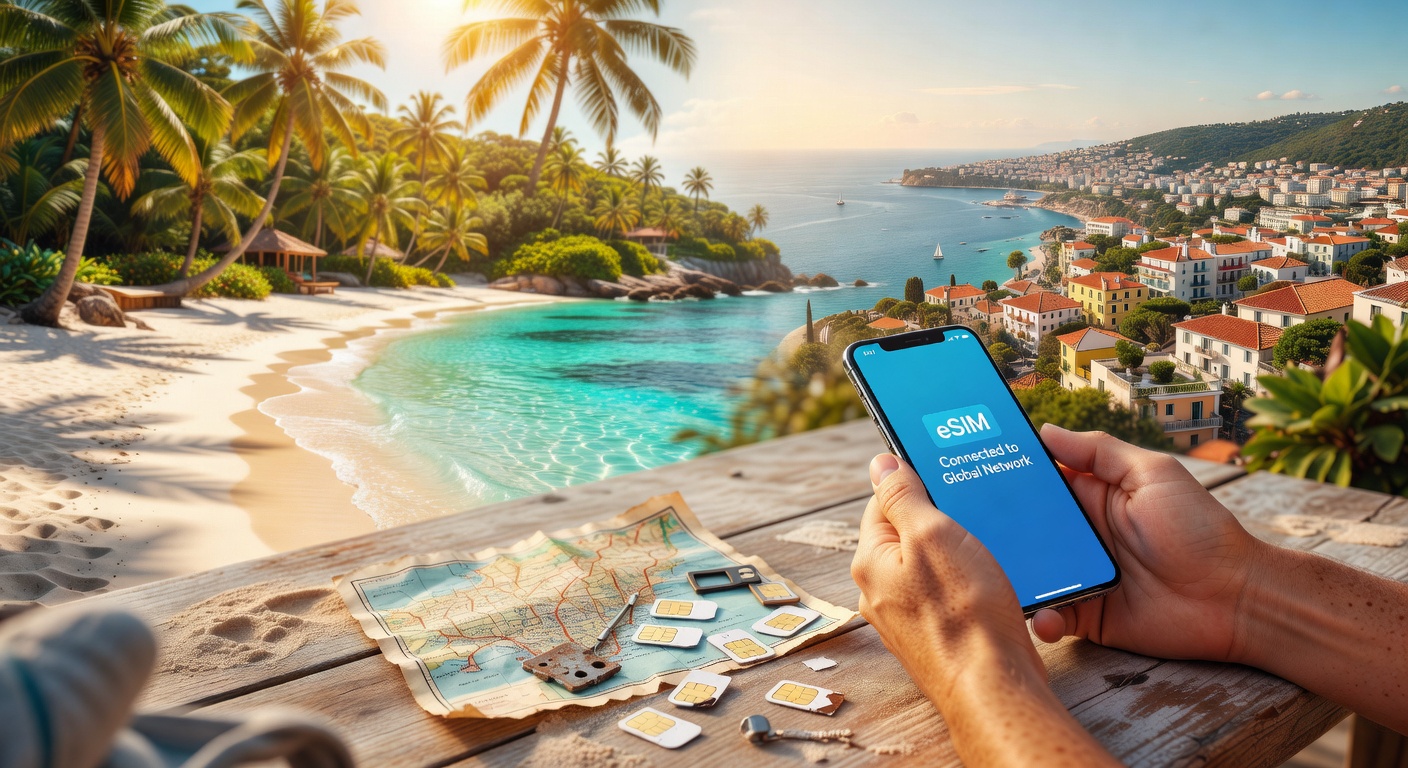
The SIM Card Struggle is Real
Let me paint you a picture: You've just landed in Bangkok after a 15-hour flight. You're jet-lagged, your phone has no signal, and you need to find your hotel transfer. So you join the queue at a phone shop, trying to communicate through gestures while fumbling with your phone's SIM tray using a paperclip you borrowed from the counter.
Sound familiar? I used to think this was just part of the travel experience. Then I discovered eSIMs, and honestly, I felt a bit silly for not making the switch sooner.
What Exactly is an eSIM?
Think of an eSIM as a digital version of those tiny plastic cards we've been dealing with for years. Instead of physically swapping SIMs, you download your data plan directly to your phone. It's like having a universal translator for cellular networks – your phone can speak the local "language" wherever you land.
The best part? Most phones made after 2018 already have this capability built in. You might not even realize you're carrying around this travel superpower in your pocket.
Why I'm Never Going Back to Physical SIM Cards
No More Tiny Plastic Casualties
I can't tell you how many SIM cards I've lost over the years. They're like travel socks – they just disappear into the void. With eSIMs, there's nothing to lose because everything lives digitally on your device.
Instant Connection
Remember that Bangkok scenario? With an eSIM, I would have purchased and activated my data plan before even boarding the plane. The moment I turn off airplane mode, I'm connected. No queues, no language barriers, no stress.
Keep Your Home Number
Here's something I love: you can run both your home SIM and travel eSIM simultaneously. I can receive important calls and texts on my regular number while using local data rates. It's like having two phones in one.
Better Rates, Better Coverage
I've found that eSIM providers often offer more competitive rates than airport kiosks or hotel Wi-Fi packages. Plus, you can shop around and compare options from the comfort of your home.
The Money-Saving Reality Check
Let's talk numbers because who doesn't love saving money on travel? Those airport SIM cards can cost anywhere from $20-50 for basic coverage. Hotel Wi-Fi charges are often outrageous – I once paid $15 per day just to check email.
With eSIMs, I typically spend $10-30 for unlimited data that lasts my entire trip. For longer adventures, some providers offer regional plans covering multiple countries, which is perfect for that European backpacking trip you've been planning.
Choosing the Right eSIM Provider
Not all eSIM services are created equal. I look for providers that offer:
- Transparent pricing with no hidden fees
- Good coverage in my destination countries
- Easy setup with clear instructions
- Reliable customer support (preferably 24/7)
- Flexible data allowances that match my usage patterns
Some providers specialize in specific regions, while others offer global coverage. If you're planning a multi-country trip, regional plans can offer serious savings compared to buying individual country packages.
Pro Tips for eSIM Success
Check Compatibility First
Not every phone supports eSIMs, and some carriers lock this feature. A quick Google search of your phone model plus "eSIM support" will tell you what you need to know.
Download Before You Go
Set up your eSIM while you're still at home with reliable internet. Most providers let you purchase and install the profile in advance, then activate it when you arrive.
Keep Your Physical SIM Safe
Even though you're going digital, don't lose that physical SIM from home. You'll need it when you return, and replacing it can be a hassle.
Monitor Your Usage
Most eSIM apps show real-time data usage, which is super helpful for staying within limits and avoiding surprise charges.
When eSIMs Might Not Be Your Best Option
Let's be honest – eSIMs aren't perfect for every situation. If you're traveling to very remote areas or countries with limited digital infrastructure, a local physical SIM might still be your best bet. Also, if your phone doesn't support eSIMs or is locked to a specific carrier, you'll need to stick with traditional options.
For group travelers sharing data, a portable Wi-Fi device might make more sense than multiple individual eSIM plans.
The Bottom Line
Switching to eSIMs has simplified my travel routine in ways I didn't expect. No more airport phone shop detours, no more asking hotel staff for Wi-Fi passwords, and no more anxiety about staying connected in emergencies.
It's one of those travel upgrades that seems small but makes a big difference in your overall experience. Kind of like discovering packing cubes or getting Global Entry – once you try it, you wonder how you ever traveled without it.
The next time you're planning a trip, consider giving eSIMs a shot. Your future jet-lagged self will thank you when you land with instant connectivity instead of hunting for a phone shop.